
Ottumwa Fire Chief releases 600-page emergency operations report
July 21, 2026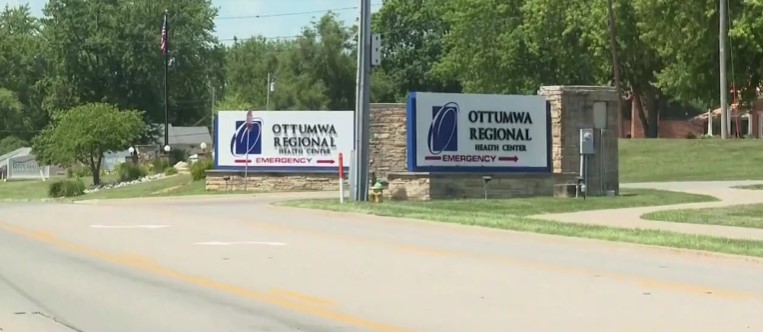 By Elizabeth Shores
OTTUMWA, Iowa — Earlier this week, Ottumwa Fire Chief Sean Canto released a nearly 600-page report on behalf of the Ottumwa Fire Department detailing ways to improve emergency operations in Wapello County.
KTVO- Ottumwa Fire Chief Releases 600-page emergency operations report
According to the document, the Ottumwa Fire Department “independently undertook a complementary report” as the county searches for ways to improve local EMS operations, cost-efficiency and patient outcomes.
It has 11 main recommendations:
The Ottumwa Police Department takes over all dispatching services for Wapello County, including medical and fire dispatch.
Establish a County EMS Clinical Advisory Committee with reps from county fire departments, Ottumwa Regional Health Center (ORHC) and other emergency response agencies. It says the already-existing Wapello County EMS Advisory Committee has “largely remained unchanged since its formation and hasn’t made formal recommendations on updates.”
Enhance collaboration between fire departments and ORHC via interagency training by creating the Wapello County EMS and Fire Training Consortium.
Engage legal counsel to review agreements and changes between county fire departments and EMS.
Develop a county-wide emergency response plan, something the report says the county is lacking.
Find a way to share data between agencies for better coordination between first responders and hospitals, and track vehicles.
Designate separate response zones for emergency situations—tailoring response plans to certain areas and giving them their own goals.
Strengthen collaboration between OFD and Ottumwa Regional Medical Intensive Care Service to improve emergency responses and meet community expectations—especially when there are multiple calls at once.
Implement Mobile Integrated Health and Community Paramedicine programs. It suggests that EMS personnel should take on more flexible, community-based roles.
Find a way to share data between agencies for better coordination between first responders and hospitals, and track vehicles.
Designate separate response zones for emergency situations—tailoring response plans to certain areas and giving them their own goals.
One of the report’s main messages is that just because something has been a certain way up to this point, doesn’t mean it should remain that way. Ottumwa Regional Health Center CEO Richard Bergmann says his biggest concern is about how changes could affect patients.
“My focus has always been on if there's a gap, what is the gap, and what would need to be needed to fill that?” Bergmann said.
He says the current ambulance service has been providing care for nearly 45 years, and that it all comes down to responsibility and long-term sustainability.
“If there is a change of responsibility, my request all along has been, ‘What's the transition plan? What would that look like?’ Because we cannot go more than one minute without making sure that we have the service,” Bergmann said.
And as for maintaining local control, Bergmann says he’s optimistic.
“I do know that the people I report to actually have been very supportive. [...] I've been able to initiate purchasing two brand new ambulances and refitting a third in order to stabilize our current fleet,” Bergmann said.
Bergmann also says he’s all in for more collaboration, interagency training, attaining new accreditations and finding more preventative healthcare solutions.
“I really think anytime that we can expand our partnership—no matter who ultimately holds the 911 responsibility for emergency services—that's something I definitely would support,” Bergmann said.
He says the ambulances’ average response times last year were around seven and a half minutes, and longer responses were usually due to multiple calls at the same time.
Overall, he’s open to whatever is best for the community, whether that means operating through the current ambulance system or under the fire department—but no matter what, he’s not willing to risk patient care.
“In my mind, it's not around ownership. It's about, the responsibility. [...] It's not just that I don't want to—I cannot hand it off until there's a solid plan, and from what I know about the people in the county, they also have that same passion,” Bergmann said.
Chief Canto is expected to schedule an official meeting to go over the report.
We reached out to the sheriff’s office and police department, but they haven’t provided comments at this time.
Wapello County Emergency Operations Center Director Tim Richmond sent us this statement:
“The Wapello County Board of Supervisors established the Emergency Medical Services Advisory Council to study our county's entire EMS system and make recommendations. Both the County and City officials are waiting on that recommendation. EMSAC has been waiting for a proposal since May. We just received it yesterday [July 15] and will review it over the next couple of weeks.”